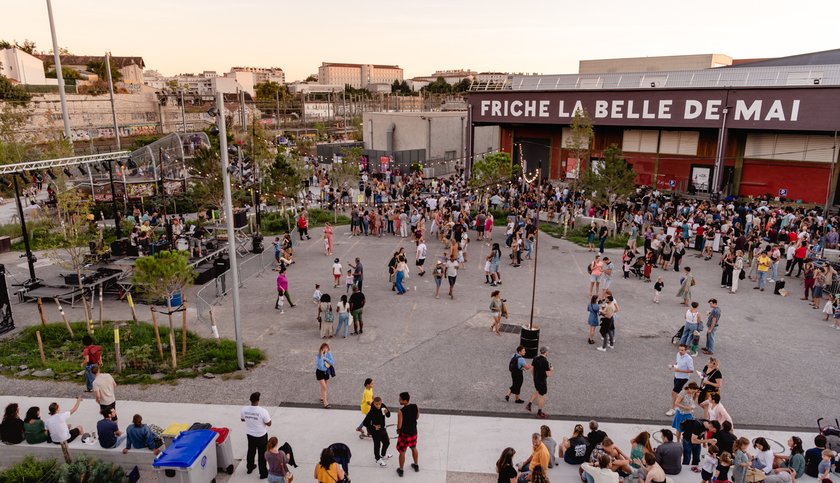
TEH member spotlight: La Friche la Belle de Mai
As part of Trans Europe Halles’ efforts to strengthen connections across our growing network, we continue with a pilot series of in-depth member interviews called "Spotlight on TEH members". With more than 170 TEH member organisations across very different contexts, we want to create space for storytelling that goes beyond project reporting: stories that help us better understand each other, our places, and the people behind them.
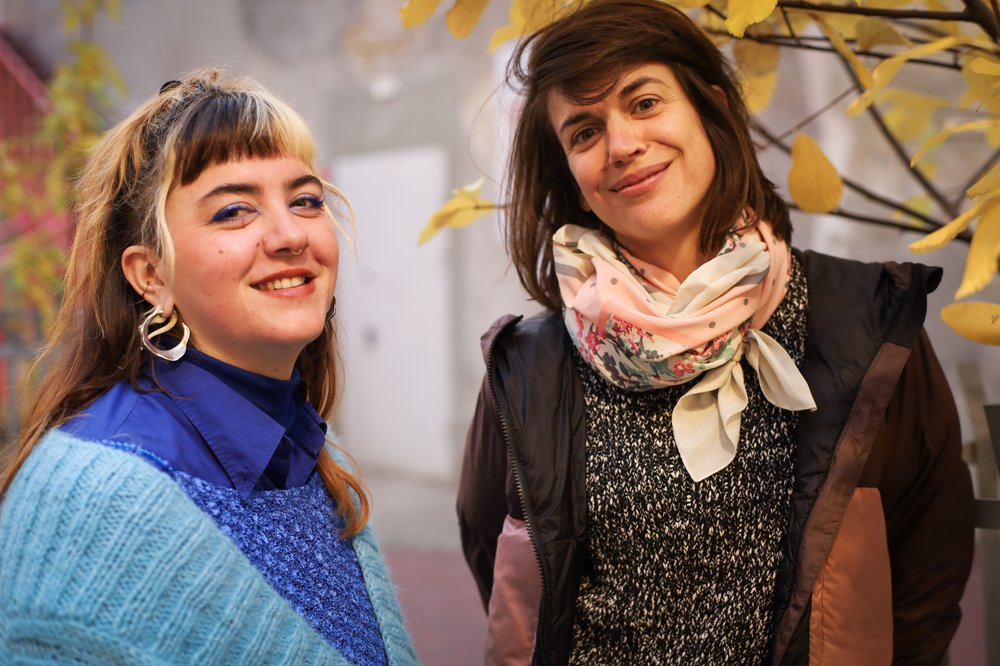
Our next TEH member in a spotlight belongs to La Friche la Belle de Mai - a TEH member from Marseille, France. A vibrant culural space in Marseille that hosts TEH101 Conference in April 2026. The interview is with Alice Comte, who is Head of International Cooperation, and Ana Stervinou, who is Production Manager at La Friche.
With La Friche, TEH celebrated the 30th anniversary of the network in 2013, when La Friche hosted the 73th TEH Meeting. And before that, La Friche hosted the 43rd TEH Meeting in 1997.
Ana and Alice, what is the story behind La Friche? What is La Friche now?
Ana: There’s a saying here: "If you think you understand La Friche, it actually means you don’t". And I think that’s the best way to describe it.
Ana continues: It’s a huge space, full of people and diverse dynamics, with layers of history and even physical secrets hidden throughout the building. We’ll do our best to explain it clearly, but if it still feels confusing, that’s completely normal.
Alice: Before it became a creative hub, La Friche was an old factory where Gitanes and Gauloises cigarettes were produced. The factory closed in 1990. Two years later, in 1992, directors of the Massalia Theater and the Bernardines Theater alongside the deputy mayor for culture in Marseille created an association to occupy and develop a cultural, architectural and urban project in the old manufacture. Within a few months, they were joined by visual artists, dancers, choreographers, music producers and other cultural operators of the city.
Alice continues: Later, when Marseille was named European Capital of Culture in 2013, the European Commission, the French state, and the municipality of Marseille invested more than €23 million to renovate and maintain the buildings. They created spaces like the Panorama, an exhibition room, which you’ll see in April at #TEH101 Conference. Over time, La Friche grew into a multidisciplinary creative hub and one of the well-established cultural centres in Marseille, and arguably in France. That’s the beginning, and a little of the story of La Friche.
You make it sound so straightforward, moving from a small self-governed community space to becoming a fully recognised cultural hub, but I imagine the process was far from easy. Could you tell me more about the challenges and complexities involved in that journey?
Alice: From the beginning, It wasn’t really a squat. The occupation of the building was never illegal. It started as a community organisation, and grew into a cooperative which it is now. Over time, however, it received increasing support from the municipality and other public funders. Initially, only a small part of the building was able to welcome the public, but now the space is much larger and fully functional.
Ana: In 2007, indeed, La Friche transitioned from an association — or civil society organisation — to a cooperative, and it has remained so for almost twenty years. The cooperative has four colleges: one for producers, including the directors of the organisations based at La Friche; one for workers, which I am part of; one for users; and one for financial contributors, including the municipality and the region.
La Friche is such a vast and vibrant place. Could you give us a sense of its scale and the size of your team? And also, you mentioned earlier that the centre is located in a very particular neighbourhood — could you tell us more about the context in which you operate?
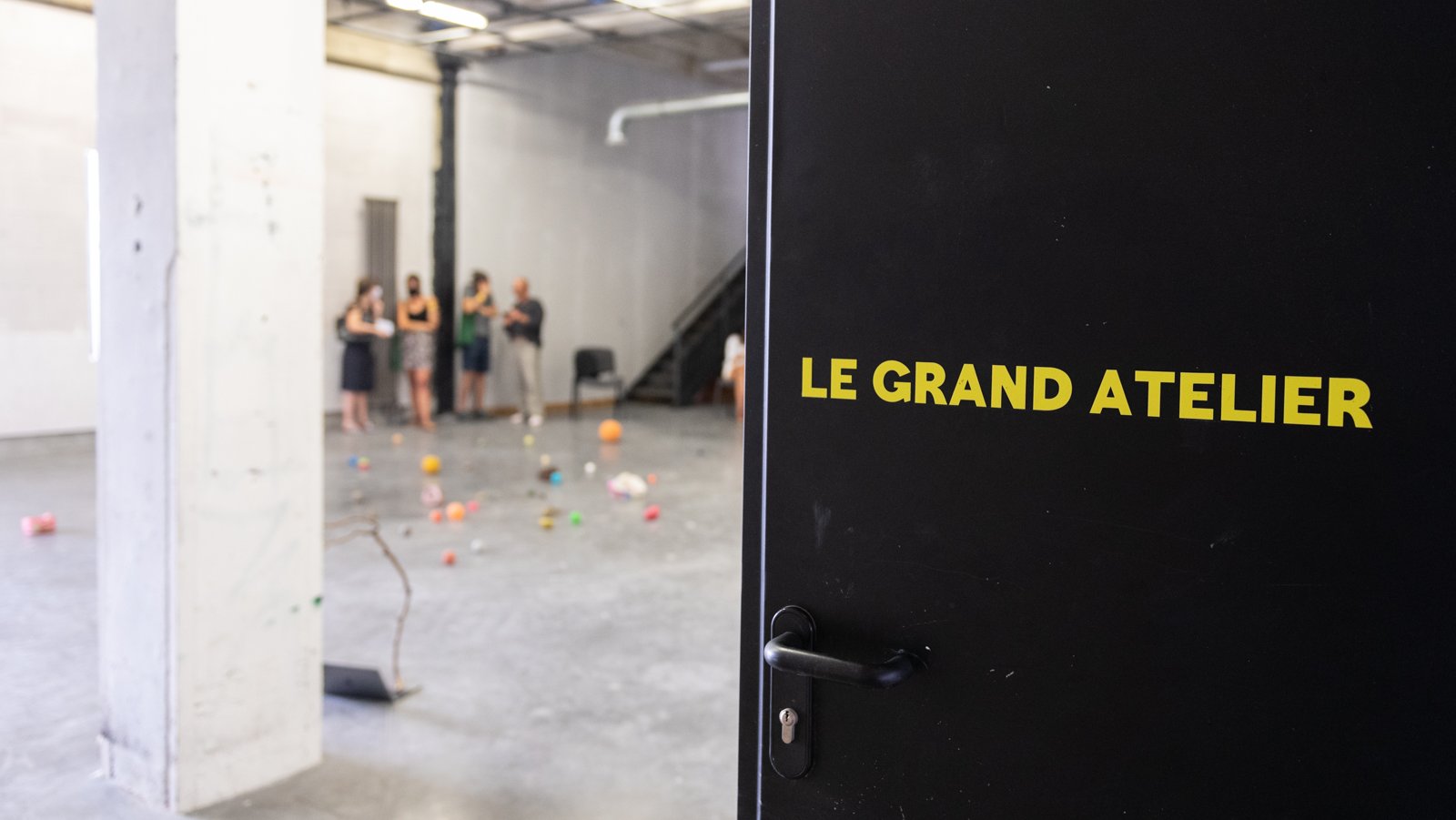
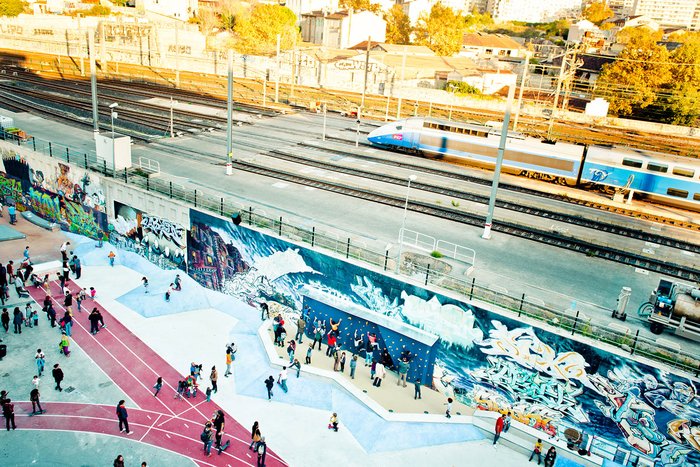
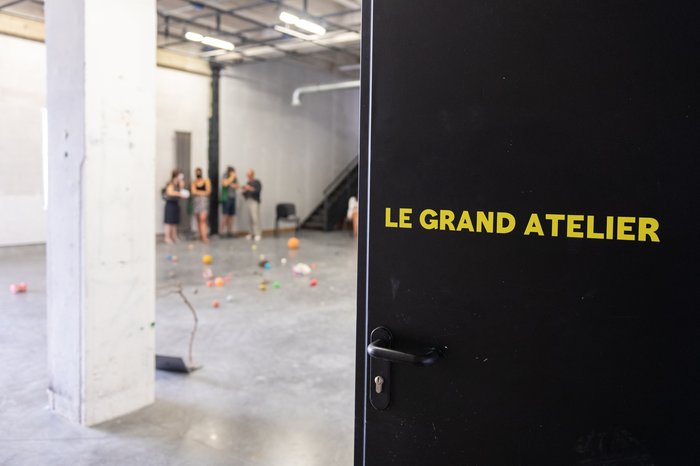
Ana: The perimeter of the building is around 45,000 sqm, but the usable space is much larger — roughly 100,000 sqm. There are five exhibition spaces, three theatres, two music venues, and one large multipurpose space that can host anything from seminars to concerts for up to 4,000 people. In addition, there is a kindergarten, training centres for actors and technicians, and offices and studios for around 70 organisations. Altogether, roughly 400 people work on site on a daily basis.
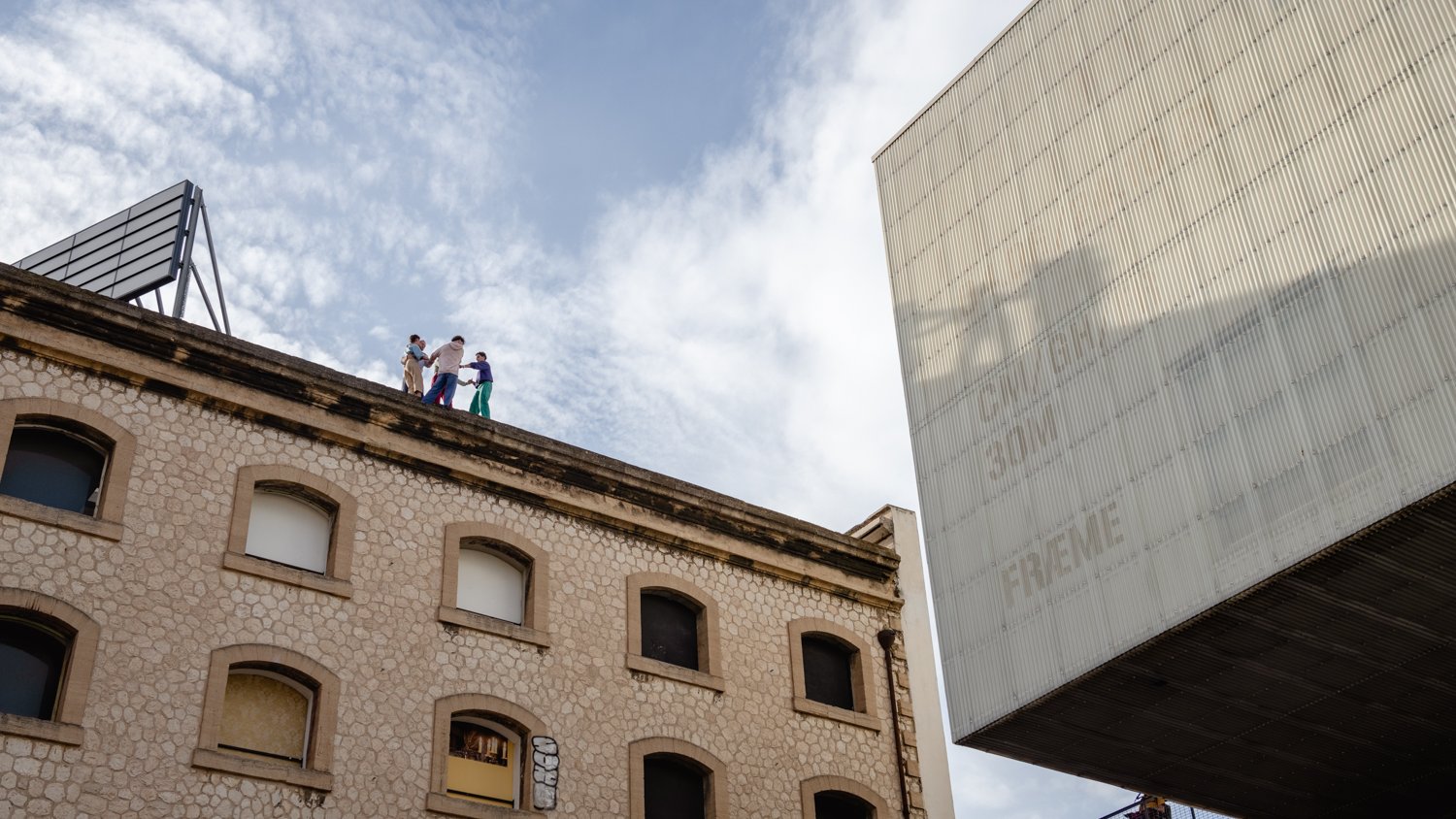
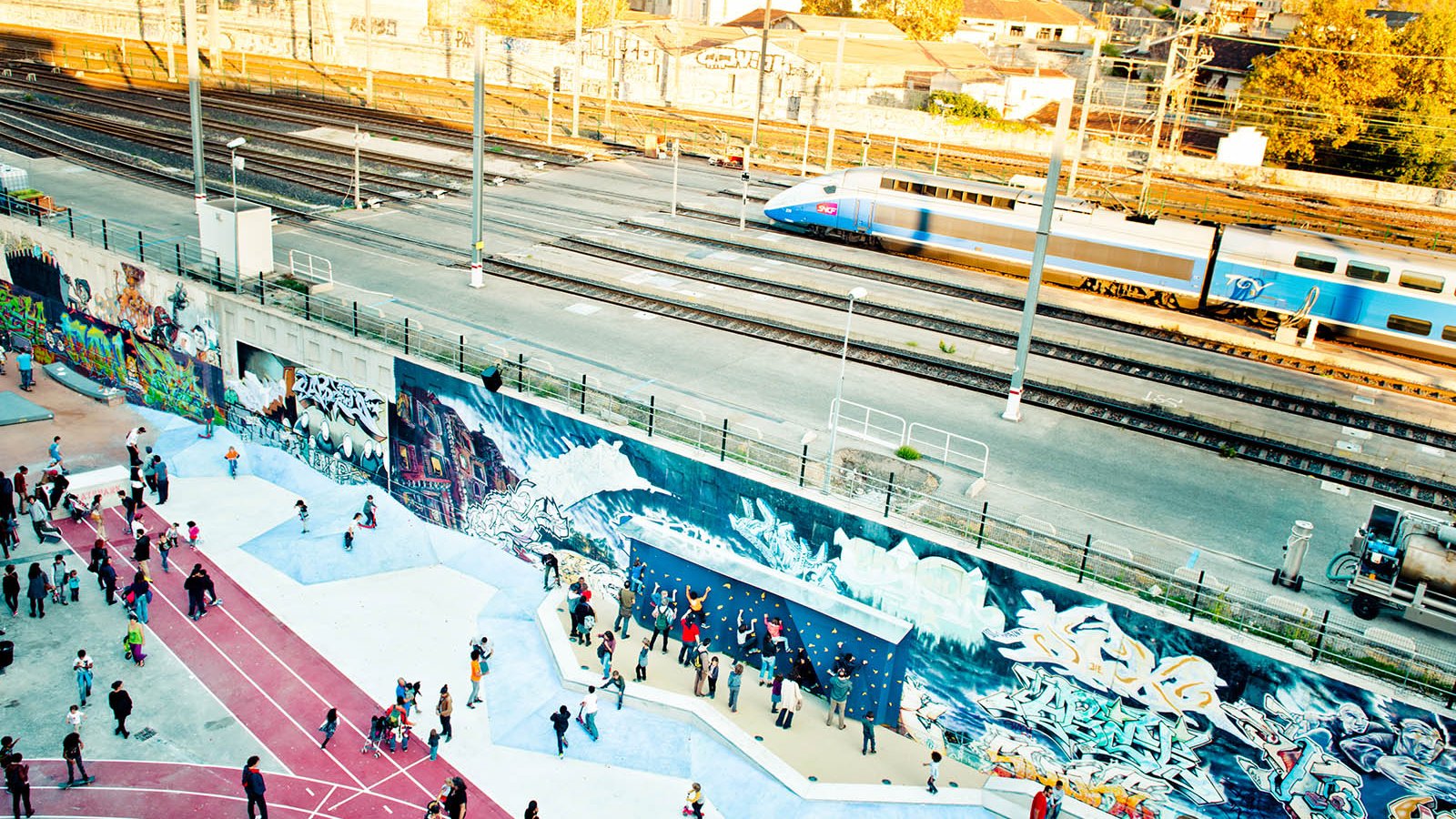
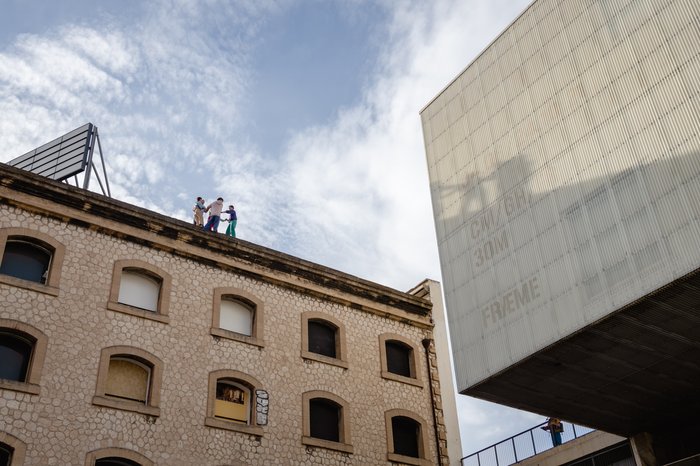
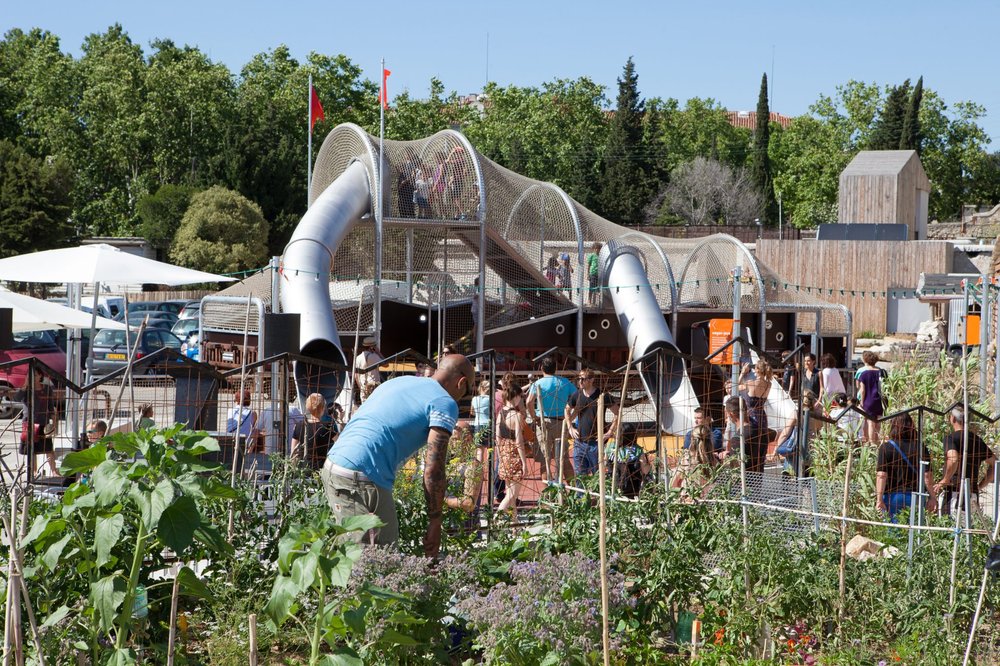
Alice: Beyond workspaces, La Friche offers a range of cultural and community facilities. There’s a bookstore, a café-restaurant, and a cinema called Le Gyptis, located just outside La Friche but still part of our territory. In the summer, the rooftop hosts concerts on Fridays and Saturdays. It’s a place where people can both create and experience culture.
Ana: The cooperative itself employs around 70 permanent staff, who manage the operations, coordinate the needs of resident organisations, and keep the entire ecosystem running. It’s a complex but lively environment, and its location within a very distinctive Marseille neighbourhood adds to the character — it’s both part of the city and a world of its own.
Could you tell us more about your audience? What types of people does La Friche attract?
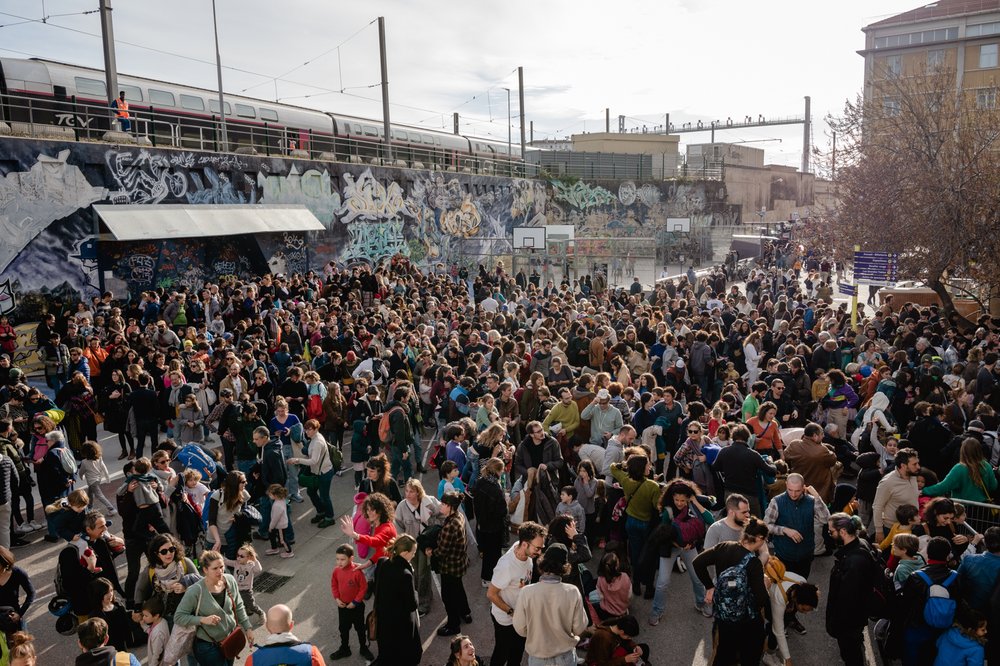
Alice: We host more than 650 events a year, bringing in around 45,000 visitors. Our audience is very diverse. La Friche is located in La Belle de Mai, a district in the city center and near the railway station, which is one of the poorest areas of Marseille. So naturally, local communities are a key part of our audience.
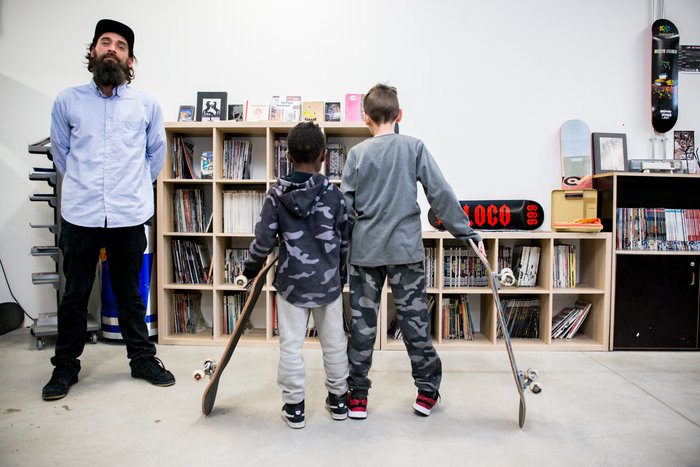
Ana: But it’s not just local residents. We also welcome citizens from across Marseille, tourists, and many young people (students, researchers, etc). Because there are around 70 organisations on site, and we host festivals and events produced by different other organisations - outside La Friche as well, the audience varies widely. Different events attract different people, so there’s a constant mix of communities in the space.
Alice: Most of our cultural and artistic programming is co-produced. We don’t charge rent for events or festivals — we provide the space freely to foster creativity. That openness helps create this eclectic mix of visitors.
Ana: Earlier this year, we inaugurated a new space called Labofriche. It’s dedicated to research and action on topics important both to La Friche and the local community — for example, ecological transition projects or collaborative demonstrations. Researchers, citizens, and local partners come together here, so our audience now also includes academics and practitioners from the nearby Aix-Marseille University, alongside cultural visitors.
"Most of our cultural and artistic programming is co-produced. We don’t charge rent for events or festivals — we provide the space freely to foster creativity. That openness helps create this eclectic mix of visitors"
Alice Comte
La Friche has reached a remarkable level of maturity as a cultural institution, but no place of this scale is without challenges. What are the three main issues or concerns you are currently focused on addressing?
Alice:
- The first major challenge is ecological. We are no longer only thinking about adapting small practices, but about fundamentally rethinking how the space is used. For example, we organise large summer festivals and rooftop events — but we have to ask ourselves whether this is still sustainable in ten years’ time. This question goes beyond environmental impact and includes social sustainability as well. Ecology, for us, is a broad framework that reshapes how we work, programme, and imagine the future of La Friche.
- The other major challenge is our economic model. Around 55 per cent of our revenue comes from public funding — from the municipality, the department, the region, and the state. The rest is built through commercial activities, ticketing, and project-based funding at national, European, and international levels. Maintaining this mixed and balanced economic model, especially in a context where public funding is increasingly fragile, is one of our key concerns.
Ana:
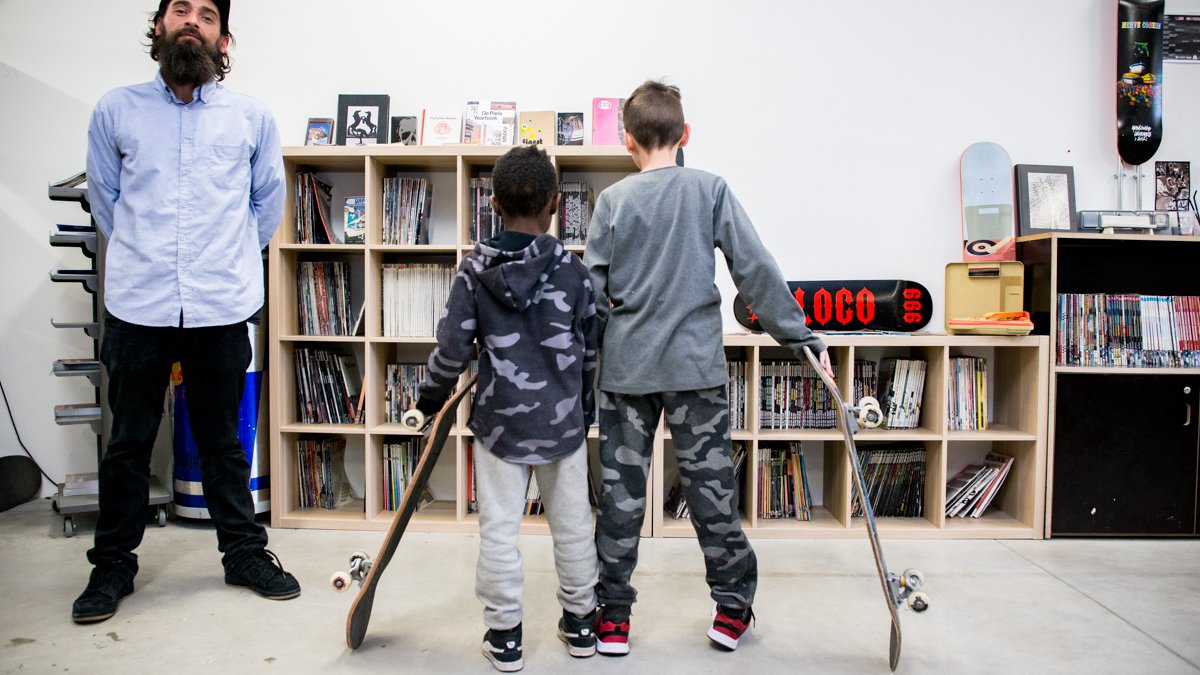
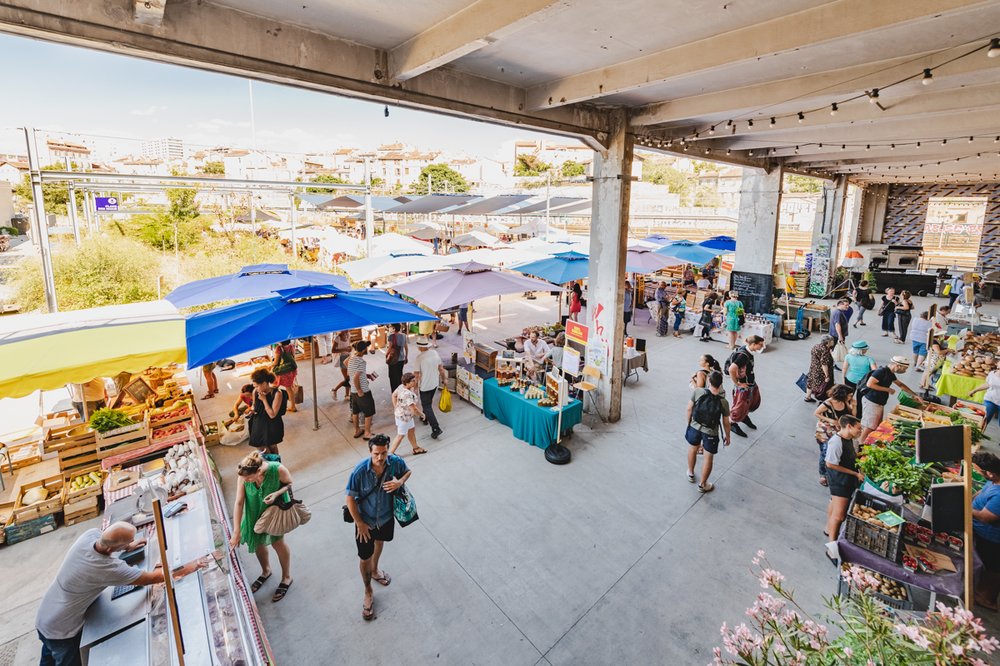
- One of the most important challenges for us is our relationship with the local community. At the beginning, La Friche was perceived mainly as a place for artists. Over time, it has become much more open and accessible, especially for residents of La Belle de Mai. Today, families come here to spend time, children play, people meet at the café, and local initiatives take place.
Ana continues:
- The challenge now is to deepen that relationship with the local community. It’s not enough for people to simply be present in the space — we want to create meaningful links. We want local residents not only to enjoy the outdoor areas, but also to feel welcome in exhibitions, theatres, and concerts, and to see La Friche as a place where their own initiatives can take place. Hospitality, accessibility, and long-term trust are at the heart of this work.
Looking back, what are the key lessons you’ve learned from working at La Friche — insights you would want to share with other members who may be at an earlier stage of development?
Ana:
- For me, one of the strongest lessons is about cooperative governance. Working as a cooperative gives real decision-making power to many people, and that can be incredibly enriching. It creates strong collective ownership and shared responsibility. At the same time, it requires a great deal of time, communication, patience, and compromise. Cooperative governance only works if you invest in the quality of the process itself. It’s not just about reaching decisions efficiently — it’s about building trust, listening carefully, and allowing space for disagreement. That investment is demanding, but it’s also what makes the model meaningful.
Alice: One of the most important lessons for me comes from working internationally. At La Friche, we collaborate not only with European partners, but also with organisations in North Africa and the Middle East — in countries such as Algeria, Tunisia, Morocco, Lebanon, and Egypt. Many of these partners operate in extremely complex political and economic contexts, often without stable public support. Working with them is deeply inspiring. They show incredible creativity, and adaptability. We have a lot to learn from these models — especially when thinking about alternative economic structures and how to remain sustainable in uncertain times. It reminds us to step back from the daily rush and recognise the strength of collective work and long-term cooperation.
Thank you, Alice and Ana!
Interviewed by Olga Zaporozhets, Trans Europe Halles Communications Officer.
Photos: portraits by Martins Grauds, 2025.
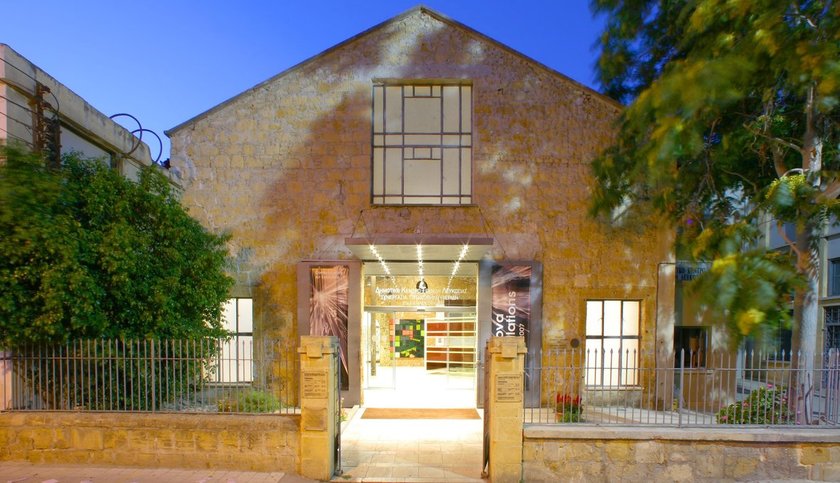
La Friche's exterior and interior: from https://www.lafriche.org/.