GALA — the Green Art Lab Alliance (2013–2015) was an EU Culture Programme project focused on sustainability and ecology in the arts and culture. With strong international outreach, it has since evolved into a still-active alliance. Today, GALA is an international network of arts and cultural organisations from Europe, Asia, the Americas, and the Caribbean, advancing environmentally conscious artistic practices — and it remains open for new members. Trans Europe Halles served as a media and dissemination partner.
What the project is about
The Green Art Lab Alliance (GALA) was a partnership of 18 European cultural organisations exploring what environmental sustainability means for the visual arts and design. All partners shared the belief that culture and the arts should take responsibility for the environment in innovative and artistic ways. The European Commission co-financed the project under the EU Culture programme 2007–2013. Between April 2013 and May 2015, the partners worked with artists, designers, and scientists to investigate the challenges and opportunities that sustainability presents for artists and art institutions, with the overall aim of sharing knowledge and raising awareness among artists, citizens, and policy makers.
Key project concepts
Environmental sustainability in the cultural sector means reflecting on the impact of our practices, using resources responsibly, and ensuring that future generations can continue to thrive. It involves reducing waste, conserving natural resources, and finding collective solutions to adapt our practices to the environmental challenges affecting society. For cultural organisations, this includes choosing partners and projects that are committed to sustainability, using sustainable materials, reducing energy consumption, and fostering awareness through creative work that encourages dialogue and action on environmental issues.
Objectives
- Explore the role of environmental sustainability in the visual arts and design.
- Share knowledge and experience across the European cultural community.
- Raise awareness about sustainability among artists, citizens, and policy makers.
- Create spaces for experimentation and dialogue between artists, scientists, and cultural organisations.
The approach behind the project
- Artist residencies and labs addressed key aspects of environmental sustainability through artistic work, research, and discussion.
- Workshops provided tools, guidelines, resources, and shared knowledge to help artists and cultural organisations work more sustainably. Topics included environmental impact measurement, reduction, technology, and innovation. Workshops were adapted to local needs, with guidance from Julie’s Bicycle, a core partner with expertise in environmental sustainability in the arts.
- Three partner meetings were held in the Netherlands, Sweden, and Scotland to monitor the project, discuss planning, and strengthen the network.
TEH role
TEH contributed as a media partner, helping to share outcomes and results through its network and channels.
Who is involved
- DutchCulture|TransArtists Desk (Netherlands) shares knowledge and experience on residency programmes and related topics, stimulating and strengthening artists’
mobility. - Julie’s Bicycle(UK) bridges the gap between environmental sustainability and the creative industries and works with over 2,000 organisations in the UK and internationally.
- Art Motile (Spain) is a small independent platform which conducts research and provides information on Spanish artist in residence programmes and artist mobility issues.
- Creative Carbon Scotland (UK) is a partnership of arts organisations working to put culture at the heart of a sustainable Scotland
- Glasgow Life (UK) is the umbrella organisation for a range of citizen services; Glasgow Arts supports the development of arts and cultural activity in the city.
- Jan van Eyck Academie (Netherlands) is an innovative and outward-looking postacademic institution, with a range of quality labs, national and international partnerships and programmes.
- MoTA - Museum of Transitory Art (SIovenia) MoTA is a multidisciplinary platform dedicated to advancing the research, production and presentation of transitory,
experimental, and live art forms. - On the Move (Belgium) is a member network encouraging and facilitating crossborder mobility and cooperation through information provision, advocacy and networking.
- Pollinaria (Italy) is an organic farm and artist residency in Abruzzo, with a research programme focused on innovative, integrated work on art, farming and the environment.
- Swedish Exhibition Agency/Riksutstallningar(Sweden) is an expert body promoting collaboration and development in the exhibition field through research, training and advice.
- TippingPoint(UK) has the mission of ‘energising the creative response to climate change’, through events, artistic commissions and networking individuals in arts and science fields.
- Translocal Institute(Hungary) is a curatorial partnership in contemporary art, fostering collaborations in curating, writing and research, with a key focus on art and ecology.
- Cape Farewell (UK) is a project founded by artist David Buckland to instigate a cultural response to the climate challenge; it brings together creative, scientists and informers.
- Centre for Contemporary Art Ujazdowksi Castle (Poland) is a large state-funded visual arts institution in Warsaw that runs the A I-R Laboratory international artist residency.
- GeoAIR (Georgia) organises and supports international exchange projects from its base in Tbilisi, with the goal of strengthening the Georgian and Caucasian art world.
- Goethe Institut Prague (Czech Republic/Germany) is the Goethe Institut for the Czech Republic with an extensive cultural and educational programme promoting German culture and language.
- Asia Europe Foundation promotes greater mutual understanding between Asia and Europe through intellectual, cultural and people-to-people exchanges.
- Imagine2020 is a European network of performing arts organisations and festivals that support artistic work which explores causes and effects of climate change.
- Trans Europe Halles
Timelime of the project
- 5–7 June 2013: Kick-off meeting for partners at Jan van Eyck Academie in Maastricht, Netherlands.
- 19 August – 8 September 2013: Cape Farewell organised a FLOATING LAB: Sea Change, travelling on the Lerwick community boat The Swan with a crew of 27 artists, scientists, and informers. The lab explored the relationship between people, place, and resources in coastal and island environments through activities both at sea and on land at the island stops.
- October–December 2013: CCA Ujazdowski Castle invited members of the Stuttgart-based architect collective Studio Umschichten for a two-month residency in Warsaw, Poland. The three architects explored the relationship between architecture and social space through the eyes of its users (CCA staff) and produced a publication, The Dark Side, which was launched at the GALA workshop in January 2015.
- 29 November 2013: Art Motile organised a workshop in A Coruña, Spain: How can mobility programmes and artist residencies contribute to environmental sustainability? It was hosted by the Gas Natural Fenosa Contemporary Art Museum as part of a two-day programme entitled Artist Mobility and Residency Programmes: Opportunities and Challenges. The workshop was led by Julie’s Bicycle, with other GALA partners (On the Move & DutchCulture|TransArtists) contributing to the mobility and residencies programme.
- 12–13 March 2014: On the Move organised a workshop in Berlin, Germany on green issues for the sustainable support of cultural mobility. Organised in partnership with OTM members ITI-Germany and IGBK, it targeted cultural policy makers in Europe, as well as public and private funders interested in including green criteria in their support of culture, specifically cultural mobility.
- 8 April 2014: As part of a series of monthly seminars in Glasgow, UK entitled Green Tease, Creative Carbon Scotland and Glasgow Arts hosted a seminar for artists and cultural organisations. Julie’s Bicycle presented on what cultural leadership in sustainability might look like.
- 20–24 May 2014: The Swedish Exhibition Agency hosted the second GALA partner meeting in Visby, Sweden. This internal work meeting allowed partners to further develop and review the ongoing programme.
- 22–23 May 2014: The Swedish Exhibition Agency organised a Green Art Lab Open Seminar in Visby, Sweden on ecological sustainability, exhibition production, and art with impact. Contributions included the EU project Frontiers in Retreat, as well as inputs from artists, cultivators, and ecologists active in arts projects in Sweden and internationally.
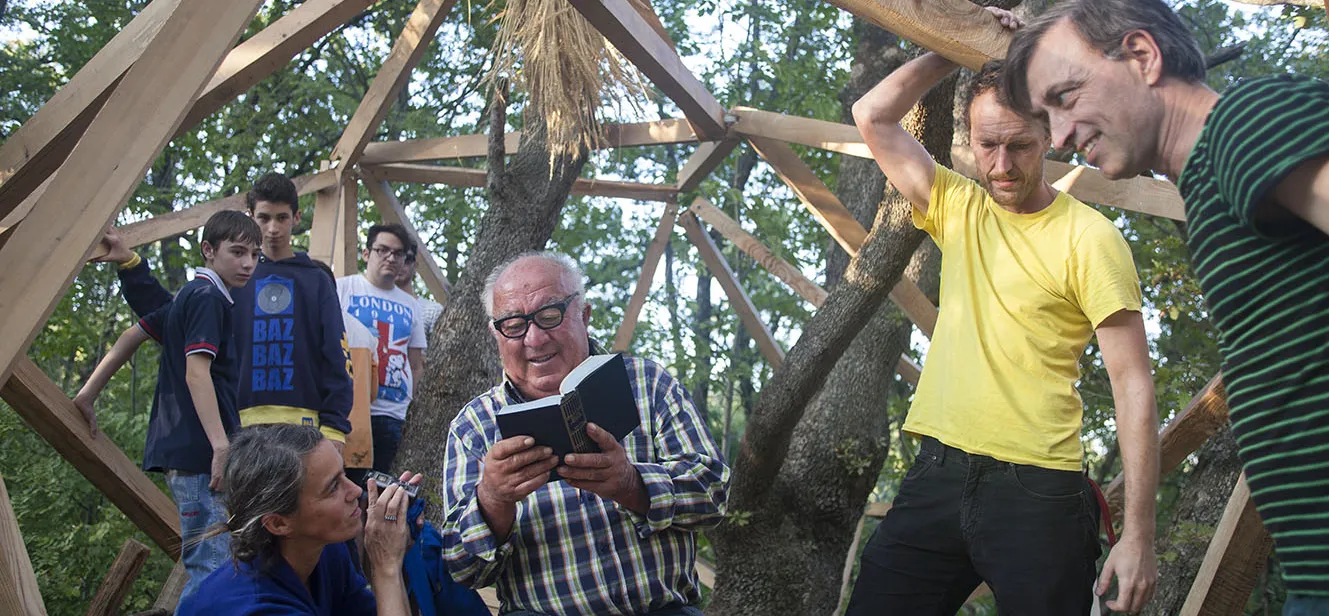
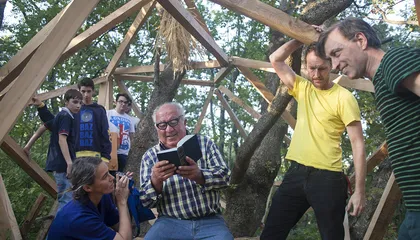
- June 2014 – March 2015: Pollinaria organised a long-term project, Consortium Instabile, in Abruzzo, Italy. This experimental architecture, radio, research, and public programme aimed to form an expanding network of knowledge about rural regeneration, connecting rural communities with creative thinkers. Environmental artists Futurefarmers came for a residency, building a ‘fantastical architectural intervention’—a treehouse to act as a meeting point and broadcasting base for Radio Instabile. A project on recycling straw waste followed, with interviews of farmers, artists, and local people in Abruzzo, England, Scotland, and elsewhere providing content for Radio Instabile broadcasts.
- 19 June 2014: Goethe-Institut Prague organised a workshop in Prague, Czech Republic on cultural leadership and environmental sustainability, including presentations by activists from Berlin and Prague involved in community urban garden initiatives.
- 30 June – 10 July 2014: GeoAIR organised a three-part artist residency, Discover Eliava, in Tbilisi, Georgia. The residency focused on waste and recycling in the Eliava second-hand car parts market. Workspace was organised inside the market for two pairs of artists (Albanian artist Donika Cina with Austrian/Tbilisi-resident artist Katharina Stadler; and Polish artist Izabella Rogucka with Giorgi Magradze from Georgia), who made sculptures and other works from waste and materials found in the market. The Russian artist duo Partizaning conducted creative research by interviewing local residents and workers in the market.
- 21–22 September 2014: TippingPoint organised a two-day gathering, TippingPoint Oxford 2014: Stories of Change, in Oxford, UK. Devised in collaboration with the Open University and other partners, it drew around 130 participants from energy policy, research, energy NGOs, business, journalism, and approximately half were artists of all forms.
- 4 October 2014 – 4 October 2015: Translocal Institute organised a year-long project, The River Symposium on Art, Ecopower and the Liberation of Energy, in London, UK; Budapest, Hungary; and Bucharest, Romania. The project explored the political, social, and ecological aspects of rivers as sites of power under the theme Rewilding Mentalities. It included talks and presentations by artists and researchers in London and Budapest, a one-day river excursion to Szentendre (4 October 2014) for artists, environmental historians, scientists, and activists, a two-day River School in the Danube Delta (10–12 May 2014), a group art exhibition on avian ecologies shown in Bucharest and Budapest, and a publication.
- 11 December 2014: Van Eyck organised the Symposium Sustainability in the Arts – More than Double Glazing at Het Nieuwe Instituut in Rotterdam, Netherlands. The event drew around 80 participants and connected with the Institute’s exhibition of designers, artists, and architects nominated for the New Material Award 2014 for innovative and sustainable use of materials.
- 16 January 2015: CCA Ujazdowski Castle organised a workshop in Warsaw, Poland in collaboration with resident architecture collective Studio Umschichten, titled Architecture and Social Space – the Ecology of Work. The workshop explored well-being and sustainability in arts and culture workplaces, with presentations by Julie’s Bicycle and The Happy Museum (UK).
- 22–23 January 2015: GeoAiR residency centre organised a two-day workshop on sustainability in the arts in Tbilisi, Georgia. The first day was a public event with a large, mixed audience including political representatives, while the second day was a smaller invitation-only session in a traditional village house at the Ethnographic Museum. The workshop sparked intense debate on environmental policy and led to the emergence of a green architecture initiative.
- 27 February 2015: MoTA organised a workshop in Ljubljana, Slovenia on Ecology of Change: New Modes of Collective Action for the Arts and Culture. The workshop was held at the Slovenian Academy of Sciences and Arts and included a presentation of Ljubljana as Green Capital of Europe 2016.
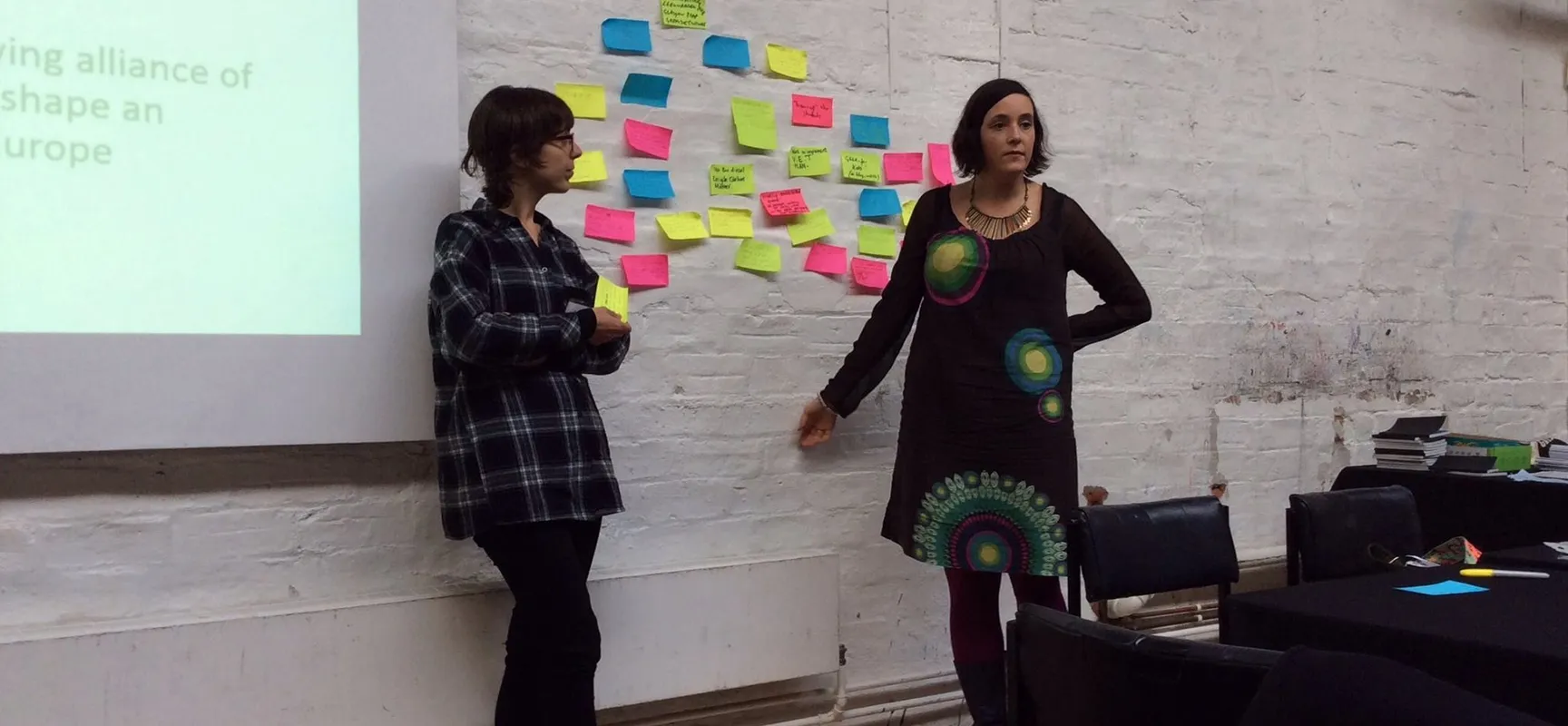
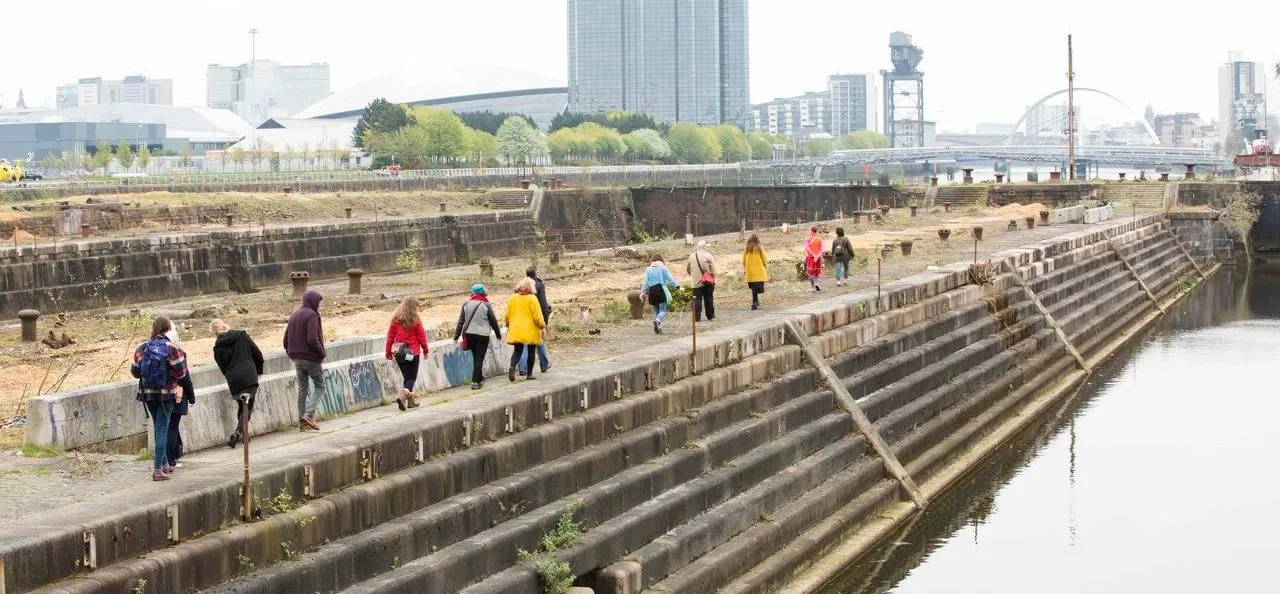
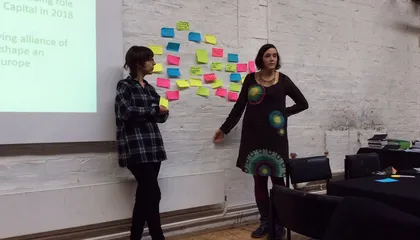
- 12–13 March 2015: The final GALA partner meeting was hosted at Tramway in Glasgow, UK by Creative Carbon Scotland and Glasgow Arts. Partners reported on programme activity, evaluated the overall GALA project, and discussed future directions. On the second day, they met artists and culture professionals from Glasgow for a shared brainstorming session on arts and environmental sustainability.
- 14 March 2015: Glasgow Arts & Creative Carbon Scotland organised Glasgow’s Green: Imagining a Sustainable City, a day-long public event in Glasgow, UK with 17 creative workshops, talks, and engagement activities on arts and sustainability.
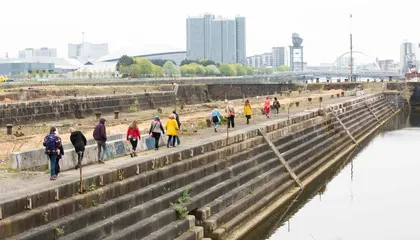
- 19 April 2015: Van Eyck Maastricht organised Cross Section of a Landscape, a public walk at Gronsveld near Maastricht, Netherlands. Visual artist Yeb Wiersma, writer/artist Miek Zwamborn, and botanist Nigel Harle guided 20 participants to explore the historical landscape through artistic and scientific interventions.
Outputs
- Development of artistic and experimental approaches to sustainability in the visual arts and design.
- Workshops and labs sharing knowledge and tools across Europe.
- Strengthened connections and collaboration between cultural organisations, artists, and scientists.
Publication:
Produced by On the Move in collaboration with the GALA network (Green Art Lab Alliance), this guide is the updated version of the one first published in 2015. The guide introduces a selection of funding opportunities and resources for arts and culture projects related to environmental sustainability. It also shares some ideas, initiatives, and overall sources of inspiration for more responsible actions, including on cultural mobility issues.